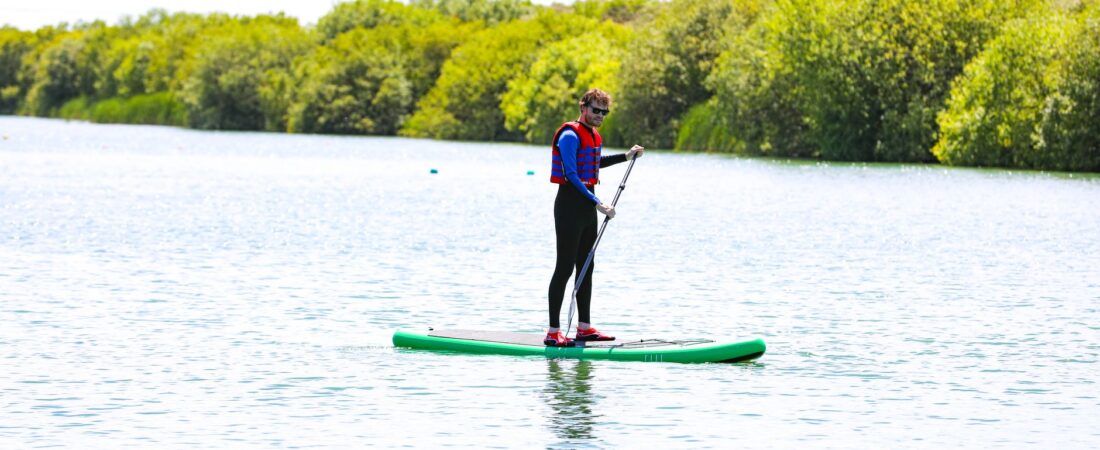
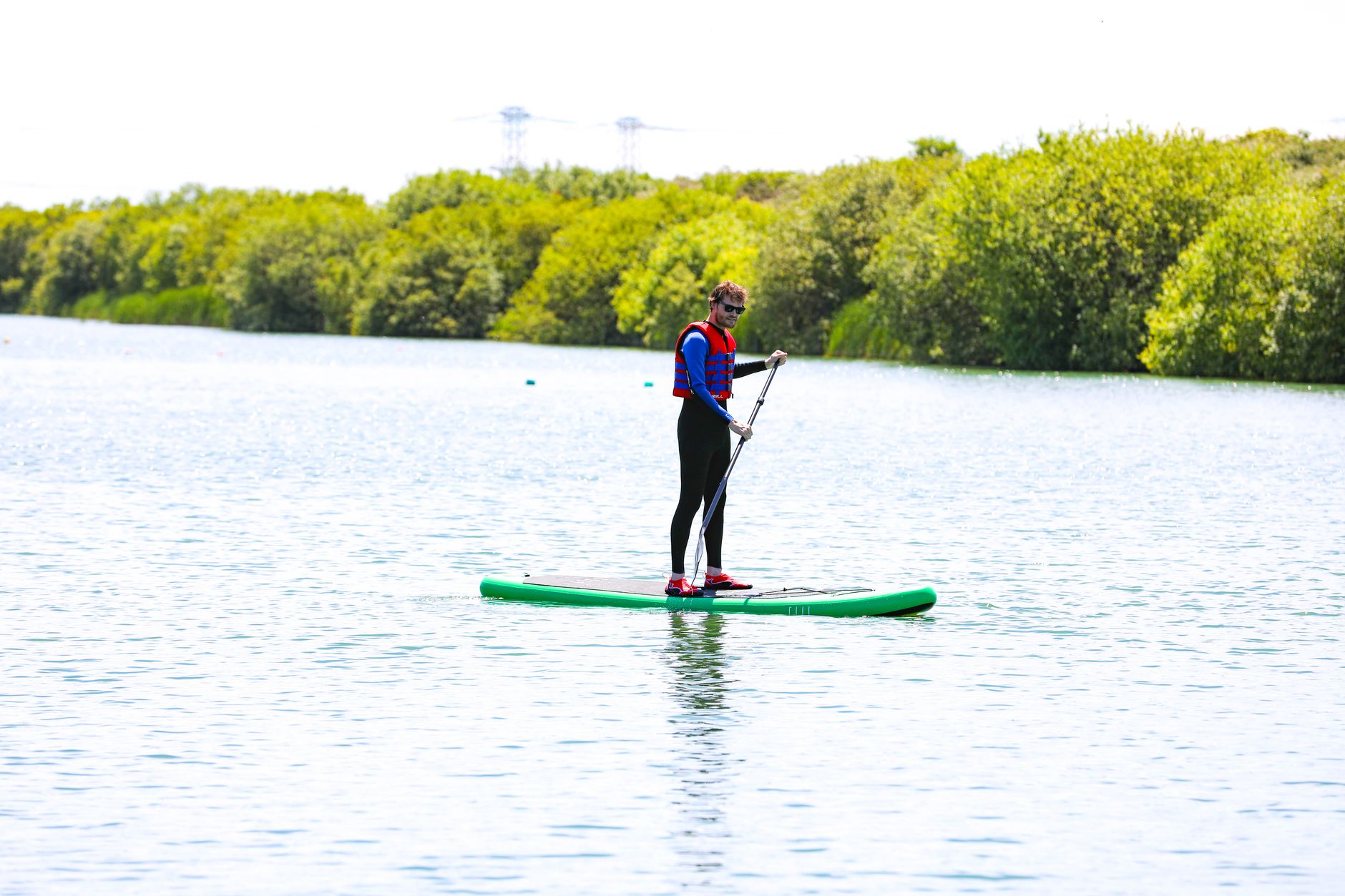
Paddle boarding on Bala Lake, or Llyn Tegid, means paddling on Wales’ largest natural lake: Eryri National Park Authority describes it as 3.5 miles long and three quarters of a mile across at its widest point, and lists paddleboarding among its popular water sports. The lake is owned and managed by the National Park Authority and carries conservation designations as a Special Area of Conservation, a Ramsar wetland and a Site of Special Scientific Interest. This guide sets out the Authority’s rules for paddlers, the exceptions, and the points where its pages word things differently, as read on 17 November 2026.
The rule: a permit before every paddle
Eryri National Park Authority says a permit is needed to take part in water sports such as paddleboarding, canoeing and rowing on Llyn Tegid, and that a valid permit must be displayed when setting off on any water sport activity. Its pages give three places to buy one:
- the pay and display machines in the lakeside car parks, which the main lake page names;
- the pay and display machines at the foreshore car park, named on the watersports permits page;
- the Wardens’ Office at the north end of the lake, next to the public car park, or a National Park Warden in person.
The Authority’s information for event organisers notes that charges apply to any activity on the water. Its terms and conditions add that it can cancel a permit in cases of abuse or infringement. Bringing a board is fine: the permits page says visitors can bring their own boats, sailboards and equipment, or hire on site between Easter and September. For the wider picture on licences elsewhere, see licences in England and Wales.
The exception: swimmers need no permit
The permits page says no permit is needed to swim, but warns that the water can be very cold and the edges deep in places. The Authority recommends that swimmers keep to the swimming lane on the west side, marked with yellow buoys, which it describes as about 50 metres wide and 400 metres long, starting at the jetty on the northern foreshore. Paddlers launching from the foreshore will be close to that lane.
What a permit does not cover: engines
This is where the Authority’s own pages differ. The watersports permits page says power boats are not permitted, with electric engines excepted. The watersports terms and conditions state that mechanically powered craft, or an engine fitted to a boat covered by a permit, are strictly prohibited, and the event organisers’ page says any form of motorised general boating or water sports is not allowed. Anyone thinking of using an electric paddle board or motor fin should ask the lake warden first rather than rely on one page.
Rules on the water
The terms and conditions and the Authority’s guidance for organisers set out the following:
- Buoyancy: life jackets or buoyancy aids should be worn at all times on the lake. The organisers’ page says lifejackets or approved buoyancy aids are required for all waterborne activities other than swimming.
- No rescue cover: lake users use the lake and foreshore at their own risk, and there is no rescue service operating on the lake.
- Anglers: lake users must keep at least 50 metres away from anyone fishing from the foreshore or from another boat, and bank-side anglers may be casting lines.
- Instructions: users agree to follow instructions from authorised National Park officers or the emergency services.
- Private land: the terms ask users not to trespass on private land.
The site’s paddle boarding safety guide and paddling with children cover buoyancy aids and leashes in more detail.
When the warden can stop activity
The lake warden is authorised to stop all boating, sailing, swimming and canoeing during bad weather. The Authority describes the lake as very cold even during the summer months, says conditions can change rapidly and should not be assumed to be mild or sheltered, and advises checking the local forecast beforehand. Llyn Tegid has a warden who gives advice to visitors, with an extra warden at busy times, and the Authority invites questions about using the lake.
Before and after: biosecurity and algae
The Authority asks everyone using the water to clean paddleboards and kit, including buoyancy aids, wetsuits and drysuits, and water boots, thoroughly before arriving and again after use. The site’s guide to Check, Clean, Dry explains the routine.
At times in summer, when the weather is warm and the water still, toxic blue-green algae can appear. The Authority’s advice is to look out for green scum on the surface, not to touch or enter the water where it is seen, to move away and get out of the water if it is encountered, and to tell the wardens. Alerts are posted on the National Park website and on signs around the lake.
Parking, dogs and camping
- Access is from National Park Authority car parks: one on the lake foreshore and another at Llangywer, mostly pay and display.
- Overnight camping is not permitted on the lake shore or in the car parks, and barbecues are not permitted on the shore.
- Dogs are welcome at Llyn Tegid, subject to the National Park’s guidance on dogs.
The bottom line
At Llyn Tegid, every paddle needs a displayed permit from the car park machines or a warden, and a buoyancy aid is expected at all times. There is no rescue service, anglers get a 50-metre berth, the warden can halt activity in bad weather, and kit should be cleaned before and after. The Authority’s pages word the engine rule differently, so electric boards are worth checking with the warden first.
Sources
- Llyn Tegid, Eryri National Park Authority, read 17 November 2026 (eryri.gov.wales)
- Llyn Tegid Watersports Permits, Eryri National Park Authority, read 17 November 2026 (eryri.gov.wales)
- Llyn Tegid Watersports Terms and Conditions (PDF), Snowdonia National Park Authority (eryri.gov.wales)
- Llyn Tegid: information for organised events, Eryri National Park Authority, read 17 November 2026 (authority.eryri.gov.wales)