
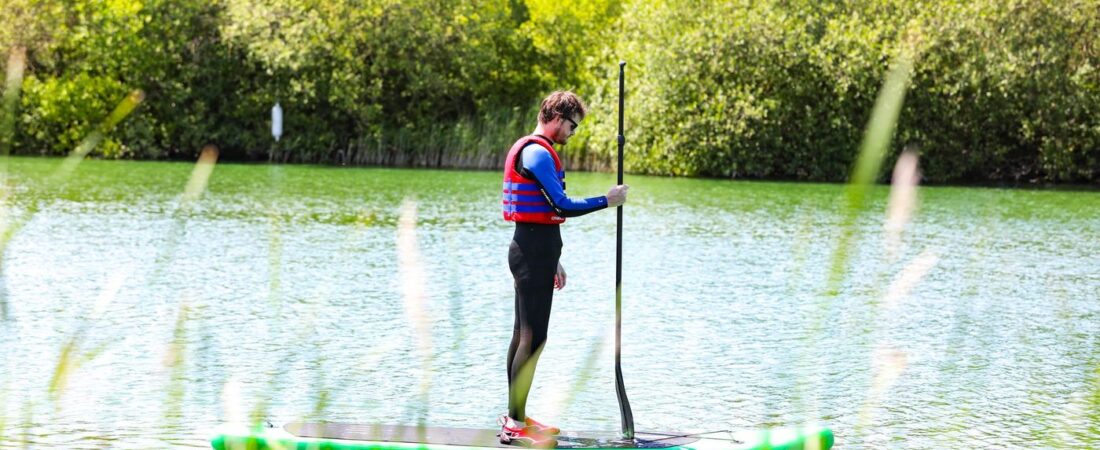
Picture a paddler who drives to Norfolk for a weekend with an inflatable board and plans to launch from a slipway on the Broads. This is an illustration, not a real person, and it is used to walk through what the Broads Authority says on two of its pages: its paddlesports page and its tolls page. Neither page is dated, and both were read on 6 November 2026. The article covers the Broads navigation area only; other waters have their own rules.
First stop: does an inflatable board need a toll?
Yes, according to the Broads Authority. Its paddlesports page says all canoes, kayaks and stand-up paddleboards, including inflatables, used in the Broads navigation area or adjacent waters are required to have either an annual or a short visit toll. The tolls page says the same for any vessel, naming canoes, kayaks and SUPs, that is kept or used within the navigation area or adjacent waters.
The tolls page adds that charges are based on square metre area and go up as the area increases, with the amount depending on the type of craft. It does not give a figure on that page, which points to a separate charges list, so the amounts are not repeated here.
Short visit or annual: where 28 days comes in
For a weekend, the relevant option is the short visit toll. The paddlesports page says it is available for either 7 or 14 days and that vessels used for less than 28 days do not need to be registered. Vessels used for more than 28 days in the financial year must be registered with the Authority, are liable to pay an annual toll and must display vessel registration marks.
The two pages word the threshold differently. The paddlesports page speaks of vessels used for more than 28 days in the financial year, while the tolls page speaks of every vessel kept in the Broads area for more than 28 days, and says registration is free. Because the wording differs, a paddler close to the threshold should ask the Authority which test applies.
The other route: Paddle UK membership
The Authority says Paddle UK members are exempt from paying tolls, and that a member is licensed to canoe, kayak or stand-up paddleboard on any of its waterways, including the main rivers and associated broads and dykes, without a toll on the craft. Members need to carry proof, such as a digital or physical membership card, which Broads Authority Rangers may ask to see on the water.
Insurance, safety certificates and the tolls page
The tolls page lists what a tolled vessel must have: either an annual toll or a short visit toll; third party insurance, except unpowered vessels with a block area of less than 6 square metres; and a valid boat safety certificate for vessels within the scope of the scheme, which it says is not required for a short visit toll. GOV.UK’s inland waterways page takes a similar line, saying that a privately owned open boat with no motor, for example a canoe, paddleboard or rowboat, does not need a Boat Safety Scheme certificate. Whether an individual board falls under the insurance exception depends on its block area, which the page does not define, so the Authority is the place to confirm.
On the water: keep to the right
The Authority says river traffic is always required to stay to the right-hand side of the channel unless it is unsafe to do so, and that paddle craft are no exception. If overtaken on the left, a paddler should stay right until the vessel has passed, and should not congregate in the middle of the channel, particularly in a group. GOV.UK’s inland waterways page likewise says you must drive on the right and pass other boats port to port on all waterways.
Other advice on the paddlesports page includes wearing a buoyancy aid, and a tether or leash when stand-up paddleboarding; keeping a lookout; giving sailing craft space because they may tack across the river; and checking wind speed, wind direction, rain and storm forecasts, because the page says weather can change quickly and many areas are very exposed.
Waters the paddler should leave alone
- The Trinity Broads (Ormesby, Rollesby, Filby, Ormesby Little and Lily Broads): the Authority says no paddle craft are allowed to use them. They are privately owned, not connected to the Broads navigation, managed by the Norfolk Wildlife Trust on behalf of Essex & Suffolk Water, and form a drinking water supply and a Site of Special Scientific Interest.
- Private dykes and ditches: the page says most of the Broads is publicly accessible, but some areas, such as dykes and ditches, are privately owned with no public right of way, usually with signage.
- The lower reaches: the Authority does not recommend paddling there, because these more tidal waters require you to be extremely experienced, fit and able.
If something goes wrong
The Authority’s instruction for an emergency on, in or next to the water is to contact 999 and ask for the coastguard, and to try to know your location, for which it suggests that location names or what3words references help the emergency services. It also advises telling friends or family where you are going and how long you plan to be out if you paddle solo.
The bottom line
According to the Broads Authority, an inflatable stand-up paddleboard in the Broads navigation area needs a toll, either a short visit toll for 7 or 14 days or an annual toll, unless the paddler is a Paddle UK member carrying proof of membership. The Authority’s two pages word the 28-day registration test differently, so a long stay is worth checking with the Authority. On the water, paddlers keep right, avoid the Trinity Broads and private dykes, and call 999 and ask for the coastguard in an emergency.
Sources
- Canoeing, kayaking and paddleboarding, Broads Authority, page undated, read 6 November 2026 (broads-authority.gov.uk)
- Tolls, Broads Authority, page undated, read 6 November 2026 (broads-authority.gov.uk)
- Safety on inland waterways, GOV.UK (Owning a boat), page undated, read 6 November 2026 (gov.uk)