
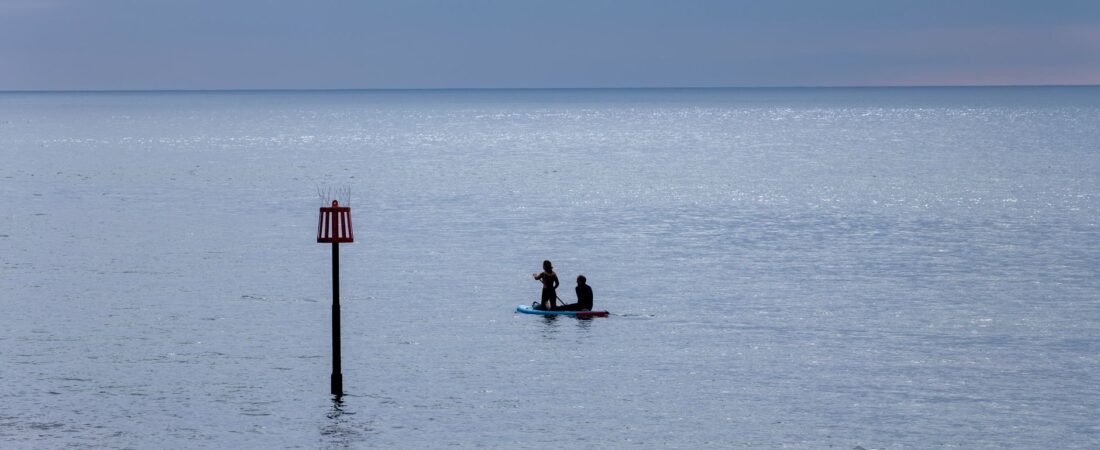
In an emergency: call 999 or 112 and ask for the Coastguard if at the coast, or the fire service if inland, as the RNLI advises. If you fall into cold water unexpectedly, the RNLI’s advice is to take a minute, because the initial effects of cold water pass in less than a minute, so do not try to swim straight away. Relax and Float to Live, then keep calm and call for help or swim to safety if you are able.
Paddle UK’s Go Paddling site describes winter paddle boarding in the UK as potentially beautiful and very rewarding, but it also means colder water, early nights and more to think about before heading out. This guide brings together what the RNLI, the Met Office and Paddle UK’s Go Paddling site say about cold water shock, drysuits and wetsuits, and planning around limited daylight. It adds to the year-round paddle boarding safety guide rather than replacing it.
What cold water does to the body
The RNLI defines anything below 15°C as cold water and says it can seriously affect breathing and movement, so the risk is significant for most of the year. It gives the average sea temperature around the UK and Ireland as just 12°C, and says inland waters such as lakes, rivers, lochs and reservoirs can be colder, even in summer.
According to the RNLI, the sudden cooling of the skin causes an involuntary gasp for breath, and breathing rates can change uncontrollably, sometimes increasing as much as tenfold. Heart rate and blood pressure rise quickly, which the RNLI says can lead to cardiac arrest. Go Paddling adds that cold water shock can happen at any time of year, not only when conditions are icy.
Drysuit or wetsuit: matching the suit to the session
The RNLI’s paddleboarding advice is that in colder weather a wetsuit or drysuit is needed, and that a swimsuit will not keep anyone warm if they fall in or the wind picks up. Beyond that, the sources point in slightly different directions depending on how wet the paddler expects to get:
- Expecting to be in the water: Go Paddling says a good wetsuit is the best option for staying warm when getting wet, because the neoprene holds water close to the skin where it warms up. The RNLI’s cold water page advises a wetsuit of appropriate thickness for the time planned in the water and the type of activity.
- Paddling a lot through winter: the Met Office’s paddling advice, written with Paddle UK, says a drysuit could be a worthwhile investment for anyone planning lots of winter paddling, because it keeps the wearer warm and dry and suits canoeing, kayaking and stand-up paddleboarding.
- Staying dry on a gentle flat-water trip: Go Paddling suggests good thermal layers for a calm canal or lake paddle, wicking layers for harder efforts, and avoiding base layers alone if getting wet, because once wet they only make the wearer colder.
Go Paddling also points out that a paddle boarder’s legs are more exposed than a kayaker’s, so waterproof outer layers need to cover the legs as well, and separate tops and bottoms can leave a gap where water gets in.
Before leaving home
- Check the forecast, wind, tides and river levels. The Met Office says to avoid paddling in a thunderstorm and to avoid offshore winds, which blow away from the shore into deeper water. Go Paddling adds that heavy rain through autumn and winter can change rivers quickly and dramatically.
- Work out the daylight. Go Paddling warns that winter days can be shorter than expected, especially when it is already overcast, and suggests being sensible about session length.
- Tell someone the plan. The Met Office advice is to say where you are going and when you expect to be back, and to let them know once you have returned.
- Pack for warmth. The Met Office and Paddle UK list layers, pogies or neoprene gloves, a cag checked for holes, a woolly hat, thick neoprene boots, and dry clothes with a warm coat or changing robe for afterwards. Go Paddling adds a flask for a warm drink and energy food.
On the water
- Wear a buoyancy aid, fastened. The Met Office calls it the most essential safety step, regardless of swimming strength. The RNLI’s cold water page says a flotation device greatly increases the chances of making it through the initial shock.
- Use the right leash. The RNLI says leg leashes suit relatively still open water or lakes, while a quick-release waist belt leash is essential kit in moving water such as tidal estuaries.
- Keep a way to call for help on your person. The RNLI says to keep it within easy reach and, if it is a phone, in a waterproof pouch. Go Paddling suggests a VHF radio may be worth having for trips further afield.
- Paddle with others where possible. The RNLI recommends paddling in a group and, at the coast, choosing a lifeguarded beach. Beach flags and launch zones are explained in this guide to lifeguarded beaches.
Back on the bank
Go Paddling suggests taking dry clothes and a coat, extra layers in case of cooling down, and a changing mat if there is no changing area, which it says keeps feet warm while changing. Afterwards, kit can be cleaned and dried as set out in Check, Clean, Dry.
The bottom line
Winter paddling in the UK starts from the emergency basics: 999 or 112, the Coastguard at the coast or the fire service inland, and Float to Live if you fall in. With UK and Ireland sea temperatures averaging 12°C, below the RNLI’s 15°C threshold for cold water, the choice of drysuit or wetsuit depends on whether a session is about staying dry or expecting a swim, and a fastened buoyancy aid matters whatever the suit. Short, overcast days make an early start, a shared plan and a modest session length part of the kit list.
Sources
- Cold water shock, RNLI water safety, page undated, read 16 November 2026 (rnli.org)
- Float to Live, RNLI water safety, page undated, read 16 November 2026 (rnli.org)
- Paddleboarding for beginners: Top tips, RNLI, page undated, read 16 November 2026 (rnli.org)
- Top tips for safe paddling whatever the weather, Met Office with Paddle UK, page undated, read 16 November 2026 (metoffice.gov.uk)
- Winter paddling: top 10 tips, Go Paddling (Paddle UK), page undated, read 16 November 2026 (gopaddling.info)
- What to wear paddle boarding in winter, Go Paddling (Paddle UK), page undated, read 16 November 2026 (gopaddling.info)